Stop the 5 Brutal SMS Marketing Mistakes Killing Your Shopify Profits
SMS marketing is the highest-converting channel in your entire stack. It’s the closest you get to a “direct line” into your customer’s pocket. In an era where email inboxes are cluttered with newsletters and social algorithms are constantly changing, a text message is one of the few places where you still have the customer’s full, undivided attention.
But there is a razor-thin line between being a “helpful brand” and being a “spam nuisance.”
Most Shopify stores cross that line every single day.
They treat SMS marketing like a megaphone. They blast generic offers, ignore the nuance of customer data, and treat their list like a commodity to be exploited rather than a community to be nurtured. The result? Your unsubscribe rate skyrockets. Your ROAS (Return on Ad Spend) tanks. And your profit margins? They vanish into the cost of bad acquisition and worse retention.
If you want to turn SMS from a “spam machine” into a high-velocity retention engine, you need to stop these 5 brutal mistakes immediately.
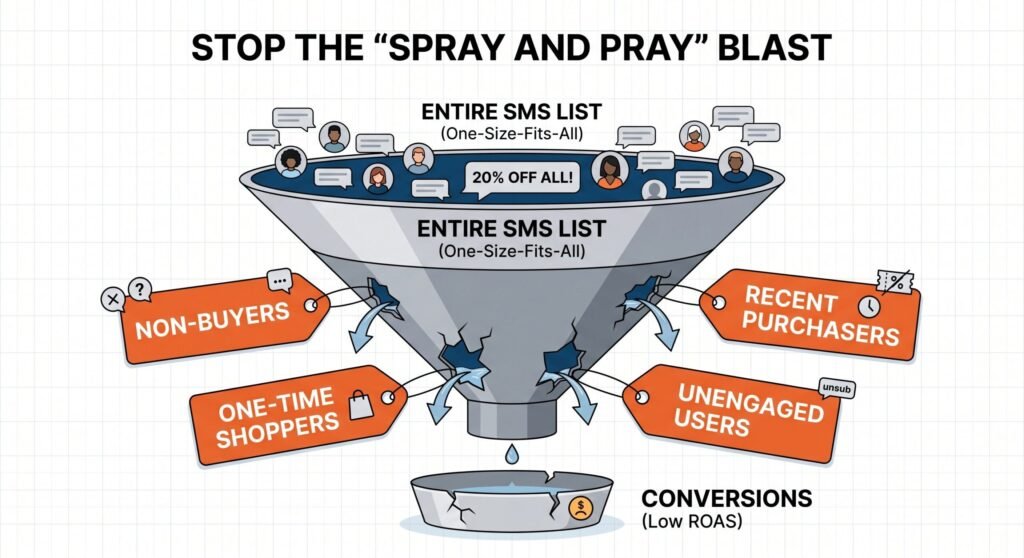
Mistake #1: The “Spray and Pray” Blast
The Flaw: Sending the same message to your entire SMS list regardless of purchase history or LTV.
Imagine walking into a luxury boutique, and the salesperson greets you by screaming, “EVERYTHING IS 20% OFF!” It doesn’t matter if you’re a first-time browser or a loyal VIP; the message is the same, and it’s loud.
When you send a “20% OFF” blast to a customer who just paid full price yesterday, you are effectively setting money on fire. You are training your customers to wait for discounts, and you are wasting your limited SMS budget on people who don’t need an incentive to buy. You are essentially paying to erode your own margins.
The Fix: RFM Segmentation (Recency, Frequency, Monetary) Your SMS marketing strategy must be rooted in data. Your “Whales” the top 10% of your customers who drive 50% of your revenue should never receive the same generic “mass blast” as someone who bought a clearance item three years ago.
- The Strategy: Segment your list. Send your VIPs exclusive, early-access drops. Send your “One-Timers” replenishment reminders. Send your “Lapsed” users a win-back campaign. By tailoring the message to the relationship, you transform SMS from a generic blast into a personalized conversation.
Mistake #2: Ignoring the “Replenishment Cycle”
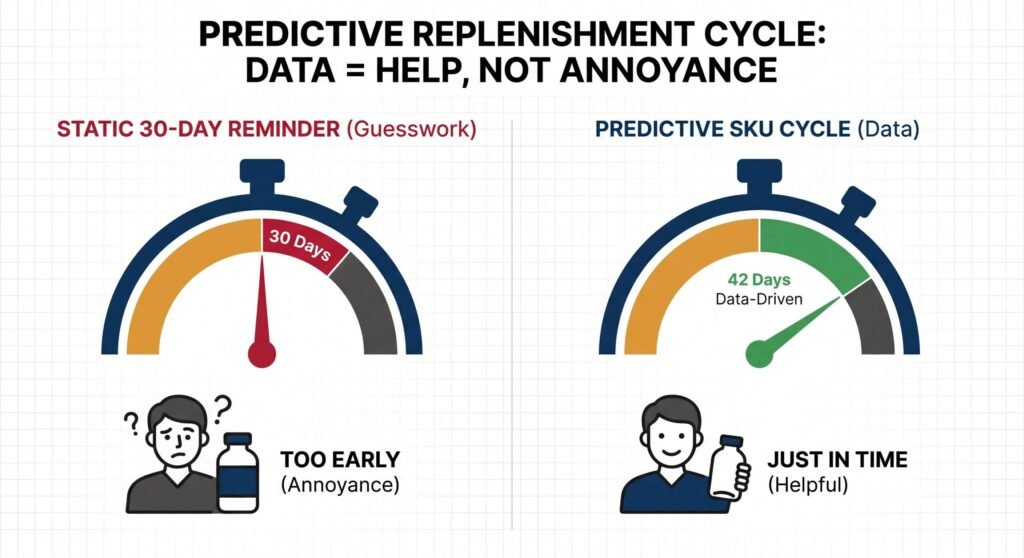
The Flaw: Sending SMS reminders on a fixed, manual schedule (e.g., every 30 days) for all products.
If you sell consumables supplements, skincare, coffee, pet food your customers have a specific “usage rhythm.” If you ping them too early, you’re an annoyance. If you ping them too late, they’ve already bought from Amazon or a competitor.
Most brands guess the cycle. They set a static 30-day reminder. But if your product actually lasts 45 days, you’re annoying them for 15 days. If it lasts 20 days, you’ve lost the sale before you even sent the text.
The Fix: Predictive Automation Use your Shopify sales data to calculate the average “Days to Reorder” per SKU.
- The Strategy: Automate your SMS to trigger 3 days before they are likely to run out. This isn’t just marketing; it’s customer service. When you act as an assistant rather than a salesperson, the “selling” happens automatically because you solved their problem before they even felt the pain of running out.
Mistake #3: The “Opt-Out” Obscurity Trap
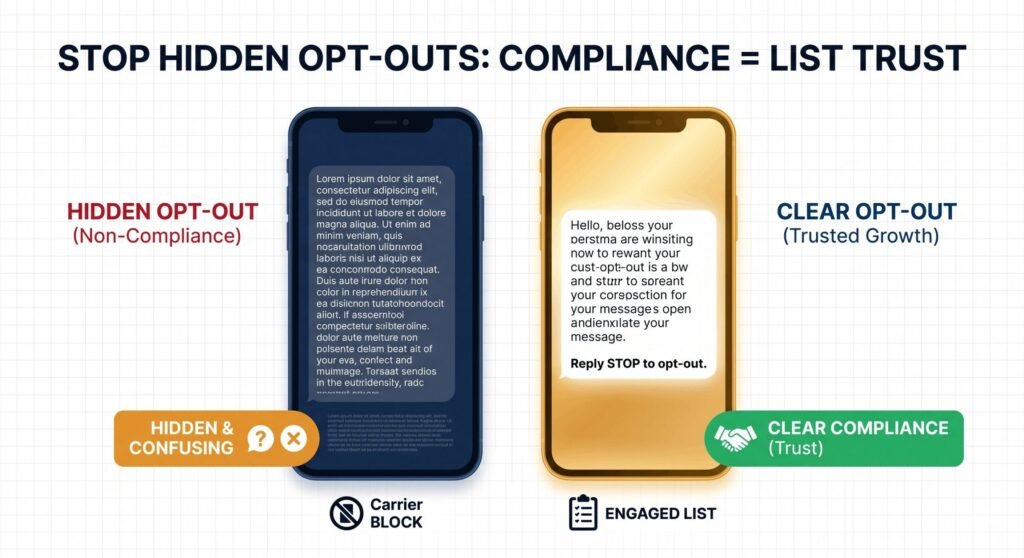
The Flaw: Making it impossible (or confusing) for customers to opt-out.
Many brands fear the unsubscribe. They hide the “Reply STOP to cancel” instruction, or they make the opt-out process feel like a maze. They think, “If I make it hard to leave, they’ll stay.”
This is a massive tactical error. In the world of SMS marketing, unsubscribes are actually a good thing.
The Fix: Lean Into Compliance and Trust First, hiding the opt-out path is a fast track to getting blocked by carriers (T-Mobile, AT&T, etc.), which kills your deliverability for the entire list. Second, a customer who wants to leave but can’t won’t buy from you they’ll just report you as spam.
- The Strategy: Make it easy. Every single SMS you send should have a clear, compliant opt-out message. By doing this, you are telling your customers: “I respect your space.” This builds trust. A smaller, cleaner list of 5,000 engaged fans will always outperform a list of 50,000 people who are just waiting for the next “block” button.
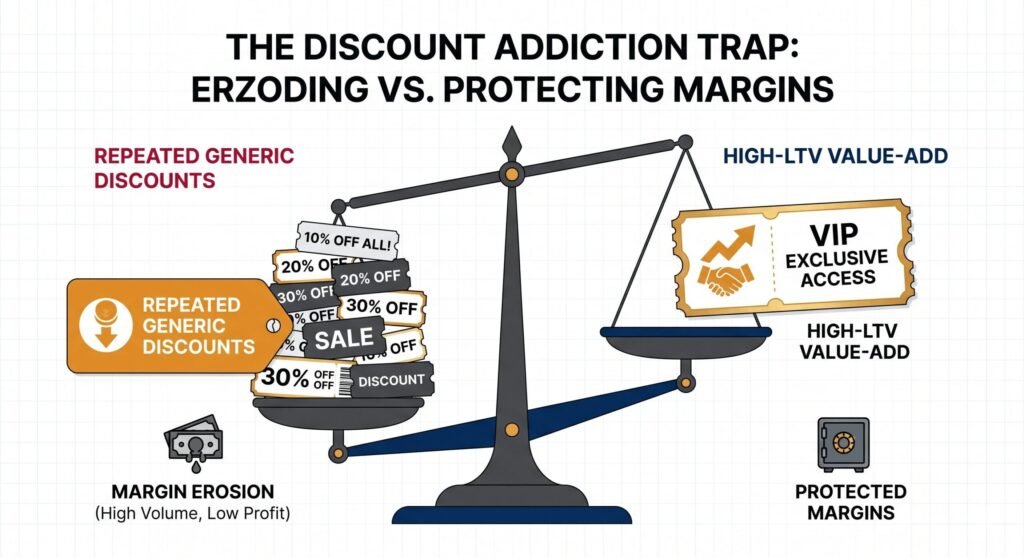
Mistake #4: Discount-Addiction (The Margin Killer)
The Flaw: Relying on discounts as the primary “hook” for every SMS marketing campaign.
When every text message from your brand starts with “Sale!” or “Discount!”, you are devaluing your brand equity. You are conditioning your customers to view your products as commodities that should never be purchased at full price.
This is “Margin Erosion.” You might see a temporary spike in revenue, but you are killing your long-term brand health.
The Fix: Shift to Value-Add Marketing Your SMS should be a vehicle for brand engagement, not just a coupon dispenser.
- The Strategy: Save the discounts for truly special occasions (Black Friday, birthday rewards). For day-to-day SMS, focus on Value-Add. Send restock alerts, style guides, “how-to” videos, or exclusive access to new drops. When you provide value, you become a brand that customers want to hear from not just a brand they buy from when there’s a clearance event.
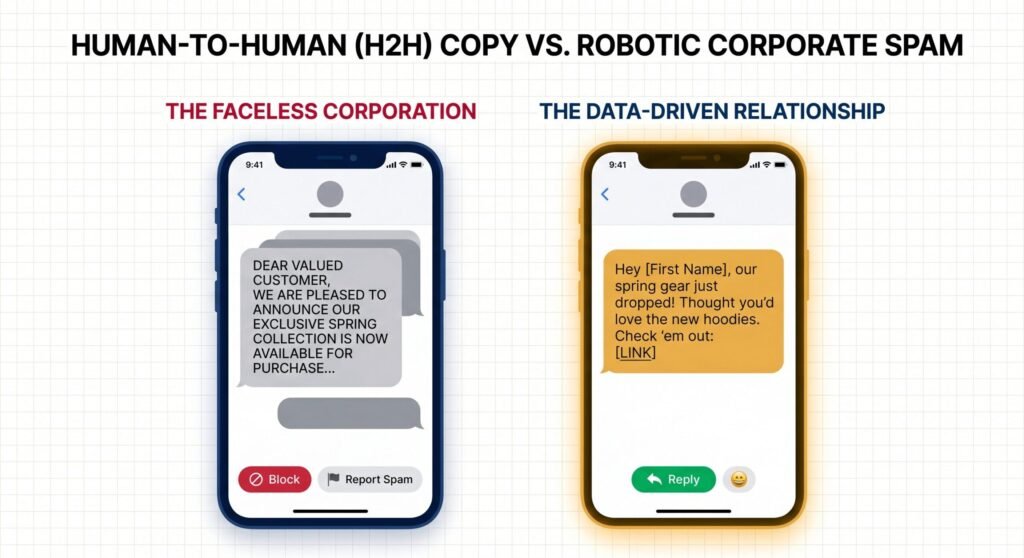
Mistake #5: The “Bot” Voice
The Flaw: Sending robotic, soulless copy that sounds like a corporate press release.
SMS is a deeply personal channel. When a customer receives a text, it’s sandwiched between messages from their mom, their partner, and their best friend. If your copy sounds like a faceless corporation, you’re an intruder.
Phrases like “Dear valued customer” or “We are pleased to announce” have no place in a text message.
The Fix: Conversational, Human-to-Human (H2H) Copy Your copy should sound like it was written by a real person. It should be punchy, casual, and direct.
- The Strategy: Use emojis sparingly but effectively. Mention their first name. Ask questions. Keep it under 160 characters if possible. If your text doesn’t feel like a note you’d send to a friend, rewrite it.
- Bad: “We are pleased to inform you that our spring collection is available for purchase.”
- Good: “Hey [Name], our spring gear just dropped. Thought you’d love the new hoodies. Check ’em out here: [Link]”
The Bottom Line: SMS is a Relationship, Not a Transaction
If your current SMS marketing strategy is “How can we get them to buy today?”, you’ve already lost the long game.
The brands that win in 2026 are the ones that use SMS to solve problems, increase engagement, and reward their best customers. They view every text message as an investment in the relationship, not an extraction of value.
Audit your current flows today. Look at your last five messages. Did they add value? Did they feel personal? Or were they just another generic “Sale” alert destined for the trash?
Fix these five mistakes, and you won’t just see a boost in your SMS conversion rate you’ll see an increase in the one metric that actually matters: Net Profit.